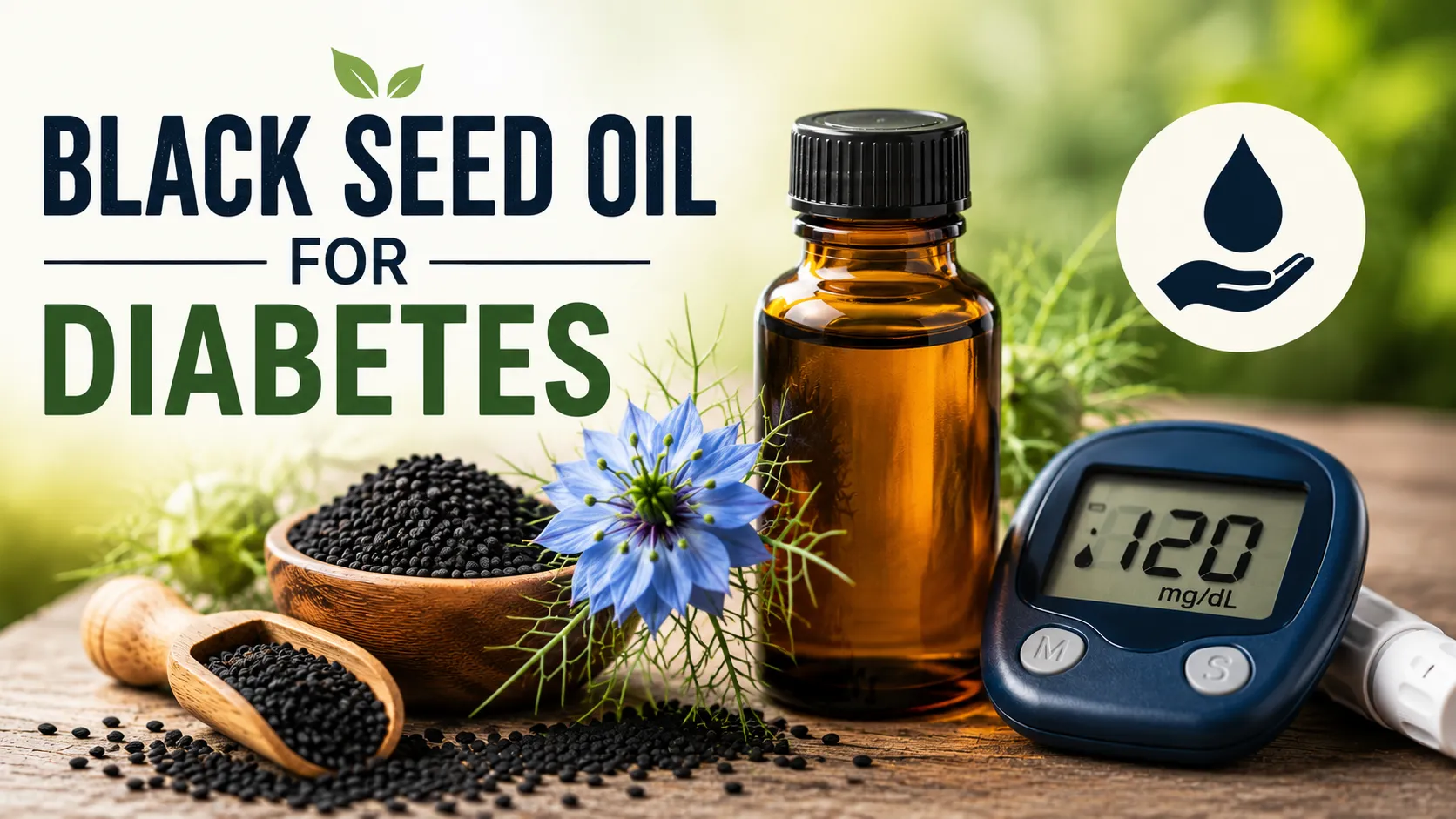
Black Seed Oil for Diabetes: Benefits, Dosage & How to Use
If you’ve been searching for natural ways to support your blood sugar levels, you’ve probably come across black seed oil for diabetes. This ancient remedy, derived from the Nigella sativa plant, has been used for thousands of years in traditional medicine.
But does it actually work for diabetes? And is it safe to use alongside your regular treatment?
Let’s break it all down — simply and honestly.
What Is Black Seed Oil?
Black seed oil comes from the seeds of the Nigella sativa plant. It’s also called:
- Black cumin oil
- Kalonji oil
- Nigella oil
The oil is rich in a compound called thymoquinone (TQ). This is the main active ingredient responsible for most of its health benefits.
People have used it for centuries to treat everything from digestive issues to immune problems. Today, researchers are studying it seriously — especially for its effects on blood sugar.
Want to understand the full picture? Check out our detailed guide on black seed oil and its overall benefits to learn more about where this powerful oil comes from.
How Does Black Seed Oil Help with Diabetes?
Here’s the key question: how does black seed oil for diabetes actually work in the body?
Research suggests it works through several mechanisms:
1. Improves Insulin Sensitivity
Thymoquinone may help the body respond better to insulin. When your cells become more sensitive to insulin, glucose enters them more efficiently. This naturally lowers blood sugar levels.
2. Stimulates Insulin Production
Some studies suggest black seed oil may help the pancreas produce more insulin. This is especially relevant for people with type 2 diabetes, where insulin production can be sluggish.
3. Reduces Inflammation
Chronic inflammation is a major driver of insulin resistance. Black seed oil has strong anti-inflammatory properties. By lowering inflammation, it may indirectly support better blood sugar control.
4. Acts as an Antioxidant
High blood sugar creates oxidative stress. This damages cells and worsens diabetes complications. The antioxidants in black seed oil help neutralize this damage.
5. Slows Sugar Absorption
There’s evidence that black seed oil may slow the absorption of glucose from the gut. This prevents sharp blood sugar spikes after meals.
What Does the Research Say?
Let’s look at what actual studies have found about black seed oil for diabetes.
| Study | Participants | Findings |
|---|---|---|
| Journal of Endocrinology & Metabolism (2010) | Type 2 diabetics | Significant reduction in fasting blood sugar |
| Evidence-Based Complementary Medicine (2015) | Prediabetic adults | Improved insulin sensitivity after 12 weeks |
| Phytotherapy Research (2017) | Type 2 diabetics | Reduced HbA1c levels by up to 2% |
| International Journal of Molecular Sciences (2019) | Animal model | Thymoquinone boosted beta cell function |
| Pakistan Journal of Medical Sciences (2020) | 40 type 2 diabetics | Lower fasting glucose and better lipid profile |
These results are promising. However, most studies are small. Larger clinical trials are still needed before black seed oil can be recommended as a standard diabetes treatment.
That said, the existing evidence is encouraging enough that many health professionals are paying close attention.
Black Seed Oil for Type 1 vs. Type 2 Diabetes
It’s worth separating the two main types of diabetes here.
Type 2 Diabetes
Most research on black seed oil for diabetes focuses on type 2 diabetes. This is where the evidence is strongest. Black seed oil may help:
- Lower fasting blood glucose
- Improve HbA1c (3-month average blood sugar marker)
- Reduce insulin resistance
- Support healthy cholesterol levels
Type 1 Diabetes
Type 1 is an autoimmune condition where the pancreas produces little or no insulin. Research here is more limited. However, the anti-inflammatory and antioxidant properties of black seed oil may still offer some benefit — especially in protecting against diabetes-related complications.
If you have type 1 diabetes, always consult your doctor before trying any supplement.
Black Seed Oil and Blood Sugar: Key Benefits at a Glance
Here’s a quick summary of the main diabetes-related benefits:
| Benefit | How It Helps |
|---|---|
| Lower fasting blood glucose | Directly reduces sugar in the bloodstream |
| Better HbA1c levels | Improves long-term blood sugar management |
| Reduced insulin resistance | Helps cells absorb glucose more effectively |
| Anti-inflammatory action | Lowers chronic inflammation linked to diabetes |
| Antioxidant protection | Protects against cell damage caused by high sugar |
| Improved cholesterol | Supports heart health — vital for diabetics |
| Weight support | May reduce belly fat linked to insulin resistance |
How to Use Black Seed Oil for Diabetes
Getting the dosage right matters. Too little may not be effective. Too much could cause issues.
Recommended Dosage
Most studies used doses ranging from 1 to 3 grams per day. This is roughly:
- ½ to 1 teaspoon of black seed oil per day
- 1 to 3 capsules per day (500mg each)
It’s usually best to start small — half a teaspoon — and gradually increase.
Best Ways to Take It
Option 1: Raw oil Take it directly with a spoon. Some people mix it with honey to reduce the bitter taste.
Option 2: With food Add it to salads, yogurt, or smoothies. Avoid cooking it at high heat, as this can destroy the active compounds.
Option 3: Capsules If you dislike the strong taste, capsules are a great alternative. They’re convenient and easy to dose accurately. Learn more about black seed oil capsules to find the right format for you.
Option 4: With warm water Mix a teaspoon in warm (not boiling) water with a little lemon. This is a traditional way of taking it in many cultures.
When Is the Best Time to Take It?
Most people get the best results taking black seed oil:
- In the morning on an empty stomach, or
- Before meals to help slow glucose absorption
Consistency is key. You won’t see results overnight. Give it at least 4 to 8 weeks of regular use before evaluating the effect.
Is Black Seed Oil Safe for Diabetics?
Generally, black seed oil is considered safe for most people when taken in moderate amounts.
However, there are a few important things to know:
Possible Side Effects
- Mild digestive upset (especially when starting out)
- Nausea in some people
- Skin rash if applied topically in sensitive individuals
These side effects are usually mild and temporary.
Drug Interactions — Important!
This is critical if you’re on diabetes medication. Black seed oil may lower blood sugar on its own. If you’re taking metformin, insulin, or other glucose-lowering drugs, combining them with black seed oil could cause hypoglycemia (dangerously low blood sugar).
Always let your doctor or pharmacist know if you plan to use black seed oil alongside any diabetes medication.
Who Should Avoid It?
- Pregnant women (may stimulate uterine contractions)
- People scheduled for surgery (may affect blood clotting)
- Those with low blood pressure (it can lower it further)
Black Seed Oil Benefits Beyond Blood Sugar
Diabetes rarely exists in isolation. Many people with diabetes also deal with related conditions. Black seed oil may help with several of these:
Heart Health: Diabetics are at higher risk of heart disease. Black seed oil has been shown to reduce LDL (“bad”) cholesterol and triglycerides.
Weight Management: Excess weight worsens insulin resistance. Some research suggests black seed oil may help reduce body weight and waist circumference.
Kidney Protection: High blood sugar damages the kidneys over time. The antioxidant effects of black seed oil may offer some protective benefit.
Blood Pressure: Hypertension often accompanies diabetes. Black seed oil may modestly reduce blood pressure levels.
Women dealing with diabetes-related hormonal or metabolic issues may also find value in the broader benefits of this oil. Read our article on black seed oil benefits for women for more on this topic.
Choosing the Right Black Seed Oil
Not all black seed oils are the same. Quality varies greatly between brands.
| What to Look For | What to Avoid |
|---|---|
| Cold-pressed extraction | Refined or heat-extracted oils |
| 100% pure Nigella sativa | Blended or diluted products |
| Dark glass bottle packaging | Plastic bottles (light degrades oil) |
| Minimum 0.5% thymoquinone | No thymoquinone content listed |
| Organic certification | Oils with added preservatives |
Cold-pressed, unrefined oil retains the highest levels of thymoquinone — the compound that delivers the real benefits.
Practical Tips for Diabetics Using Black Seed Oil
Here are some real-world tips to get the most out of black seed oil for diabetes:
- Track your blood sugar. Monitor your levels before and after starting black seed oil so you can see actual changes.
- Start low and slow. Begin with half a teaspoon daily. Increase after 1–2 weeks if no issues.
- Tell your doctor. Never use it as a replacement for prescribed medication. It should complement your treatment, not replace it.
- Be consistent. Take it at the same time every day for the best results.
- Pair it with a healthy lifestyle. Black seed oil works better alongside a balanced diet, regular exercise, and good sleep.
- Choose quality over price. Cheap oils may be diluted or poorly processed. Invest in a reputable product.
Frequently Asked Questions
Can black seed oil cure diabetes?
No. Black seed oil is not a cure for diabetes. It may help manage blood sugar levels and improve insulin sensitivity, but it cannot replace medical treatment. Always work with your healthcare provider.
How long does it take for black seed oil to lower blood sugar?
Most studies show measurable improvements within 4 to 12 weeks of consistent daily use. Individual results vary depending on diet, lifestyle, and the severity of the condition.
Can I take black seed oil with metformin?
Possibly, but with caution. Both metformin and black seed oil can lower blood sugar. Taking them together may increase the risk of hypoglycemia. Consult your doctor before combining them.
What is the best form of black seed oil for diabetes — liquid or capsules?
Both can be effective. Liquid oil may have slightly faster absorption. Capsules are more convenient and easier to dose precisely. Choose based on your preference and lifestyle. You can explore black seed oil capsules as a practical option.
Is black seed oil safe for people with type 1 diabetes?
Research is limited for type 1 diabetes. While the anti-inflammatory and antioxidant properties may offer some benefit, people with type 1 should only use it under medical supervision.
Can black seed oil cause low blood sugar?
Yes, it can lower blood sugar. If you’re not on medication, this is generally beneficial. But if you’re already on blood sugar-lowering drugs, it could push levels too low. Monitor carefully and inform your doctor.
Does black seed oil affect HbA1c?
Some studies suggest black seed oil can reduce HbA1c levels by 1–2% over several months. This is clinically meaningful and comparable to some medications — though more research is needed.
Conclusion
Black seed oil for diabetes is one of the most well-researched natural remedies in this area. The evidence — while still growing — points to real, meaningful benefits for blood sugar control, insulin sensitivity, and protection against diabetes-related complications.
It’s not a magic cure. But as part of a well-rounded approach to managing diabetes, it can be a genuinely useful tool.
The key things to remember:
- Look for cold-pressed, pure Nigella sativa oil
- Start with a small dose (½ teaspoon/day) and increase gradually
- Monitor your blood sugar closely
- Always inform your doctor, especially if you’re on medication
- Be patient — results take weeks, not days
If you’re curious about the bigger picture of what this remarkable oil can do, explore the complete guide to black seed oil benefits and see how it may support your overall wellbeing — not just your blood sugar.
Nature has given us powerful tools. Used wisely and safely, black seed oil might just be one of the better ones for supporting a healthier life with diabetes.