
Grapeseed Oil for Skin: Benefits, Uses & Honest Results
I’ll get straight to it. grapeseed oil for skin caught my attention years ago when customers kept asking for something lightweight that didn’t feel greasy or pretend to work. I run a wellness-focused business, and when the same ingredient pops up in real conversations, I listen. I even heard similar questions back when people compared options like black seed oil, which made me pay closer attention to what actually delivers results. Ever noticed how the quiet performers often beat the loud hype machines?
I tested it myself before recommending it. I hate selling fluff, and my regulars hate buying it even more. So let’s talk honestly, friend to friend, about why this oil keeps earning shelf space.
Why Grapeseed Oil Deserves Skin-Care Respect
People often assume that oils clog pores or feel heavy. I used to think the same, honestly. Then grapeseed oil walked in and calmly proved everyone wrong.
Lightweight Feel, Serious Performance
This oil absorbs fast. I mean really fast. That makes it perfect for people who want hydration without shine.
What makes it stand out:
- High linoleic acid content that supports the skin barrier
- Non-comedogenic nature, so pores stay clear
- Naturally thin texture that works for oily and combination skin
Ever wondered why some oils sit on your face like an uninvited guest? This one knows when to leave.
What Makes Grapeseed Oil a Skin Favorite
I don’t push products unless I believe in repeat use. Customers come back when results stick, not when labels shout.
Nutrients That Actually Matter
Grapeseed oil brings useful stuff to the table, not filler ingredients that look fancy on labels.
Key skin-supporting components include:
- Vitamin E for antioxidant protection
- Polyphenols that help defend against environmental stress
- Omega-6 fatty acids that support smoother texture
IMO, ingredients should work quietly but consistently. This oil does exactly that.
Grapeseed Oil for Different Skin Types
People always ask, “Will this work for me?” Fair question. I see different skin types daily, and I’ve watched how this oil behaves.
Oily and Acne-Prone Skin
Oily skin often overproduces oil because it feels stripped. Grapeseed oil helps balance that situation instead of fighting it.
Why oily skin responds well:
- Lightweight hydration prevents overcompensation
- Fast absorption avoids pore congestion
- No heavy residue left behind
Sounds counterintuitive, right? Oils fixing oily skin still surprise people.
Dry and Sensitive Skin
Dry skin needs moisture without irritation. This oil delivers calm hydration without drama.
Sensitive-skin-friendly benefits include:
- Minimal fragrance naturally
- Soothing feel without heaviness
- Smooth layering under moisturizers
FYI, many customers with reactive skin tolerate it better than thicker oils.
How I Recommend Using Grapeseed Oil Daily
Application matters more than people think. I learned this the hard way through customer feedback and, yes, my own face.
Best Ways to Apply It
You don’t need fancy rituals. Simple works best.
Effective application methods:
- Apply 2–3 drops on damp skin after cleansing
- Mix one drop into moisturizer for extra slip
- Use as a gentle makeup remover
Ever applied oil on dry skin and felt disappointed? That’s why damp skin matters.
Grapeseed Oil vs Other Popular Facial Oils
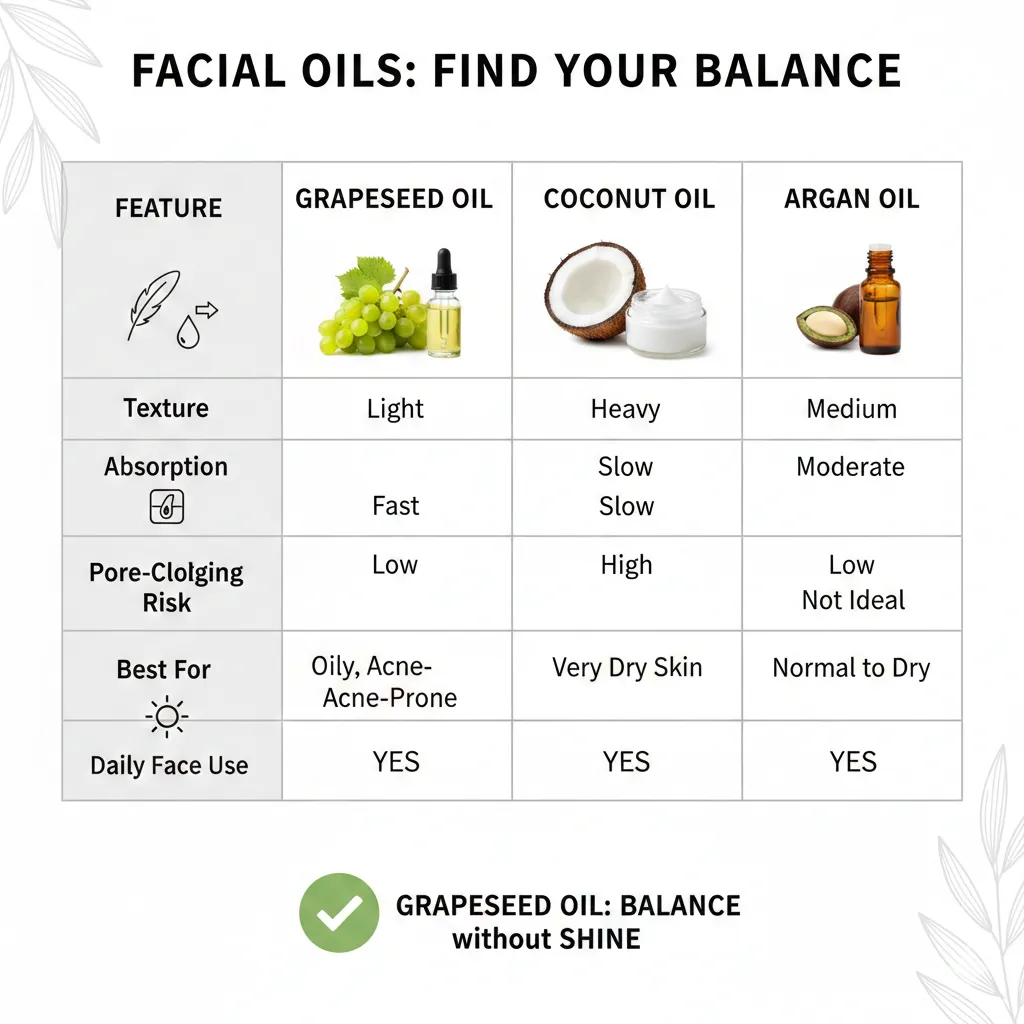
Customers love comparisons, and I get it. Choices overwhelm everyone these days.
| Feature | Grapeseed Oil | Coconut Oil | Argan Oil |
|---|---|---|---|
| Texture | Very lightweight | Heavy | Medium |
| Absorption Speed | Fast | Slow | Moderate |
| Pore-Clogging Risk | Low | High | Low |
| Best For | Oily, combo, acne-prone | Very dry skin | Normal to dry |
| Daily Face Use | Yes | Not ideal | Yes |
I stock multiple oils, but grapeseed oil for skin wins when customers want balance without shine.
Real Business Perspective: Why Customers Reorder It
I track repeat purchases closely. Reorders tell the truth.
What People Actually Report
Customers don’t speak in scientific terms. They talk about mirrors and mornings.
Common feedback includes:
- Skin feels calmer and smoother
- Makeup applies more evenly
- Less midday oiliness
One customer joked that her skin finally “behaved.” I’ll take that as a win :/
Common Mistakes People Make With Grapeseed Oil
Even good products fail with poor use. I see these mistakes often.
What to Avoid
Avoid these habits:
- Using too much oil at once
- Applying on completely dry skin
- Expecting overnight miracles
Consistency beats impatience every time. Skin loves routines, not panic.
How Grapeseed Oil Fits Into a Simple Routine
Complex routines burn people out. I always recommend simple systems that people actually follow.
Sample Minimal Routine
Morning:
- Gentle cleanser
- Grapeseed oil for skin (2 drops)
- Sunscreen
Night:
- Cleanser
- Grapeseed oil
- Moisturizer if needed
Simple, doable, and repeatable. That’s how habits stick.
Frequently Asked Questions
Can grapeseed oil replace moisturizer?
It can for oily or combination skin. Dry skin often benefits from layering it under a cream.
Is grapeseed oil safe for acne-prone skin?
Yes. Its low comedogenic rating makes it suitable for acne-prone users.
How long before results appear?
Most people notice texture improvement within 2–3 weeks of consistent use.
Final Thoughts: Is It Worth Trying?
I’ve tested trends that faded fast and ingredients that quietly stayed. Grapeseed oil for skin belongs in the second group. It doesn’t scream for attention, and it doesn’t need to.
If you want something lightweight, flexible, and easy to use, this oil makes sense. Give it time, use it properly, and let your skin do the talking. Sometimes the best results come from the least dramatic choices, and honestly, that feels refreshing.