Seed Corn on Foot: Causes, Symptoms, Treatment & Prevention
If you ever notice a tiny, hard bump on your foot that feels like a pebble pressing into your skin, you might be dealing with a seed corn on foot. These small yet painful skin bumps can make walking uncomfortable and daily activities challenging. Although seed corns are common, many people don’t understand what causes them or how to treat them properly.
In this detailed guide, you will learn everything about seed corns—from symptoms and causes to treatment, removal methods, and prevention tips. Whether you struggle with painful seed corns regularly or you’re trying to identify a new bump on your foot, this article gives you clear, simple, and helpful information.
What Is a Seed Corn on Foot?
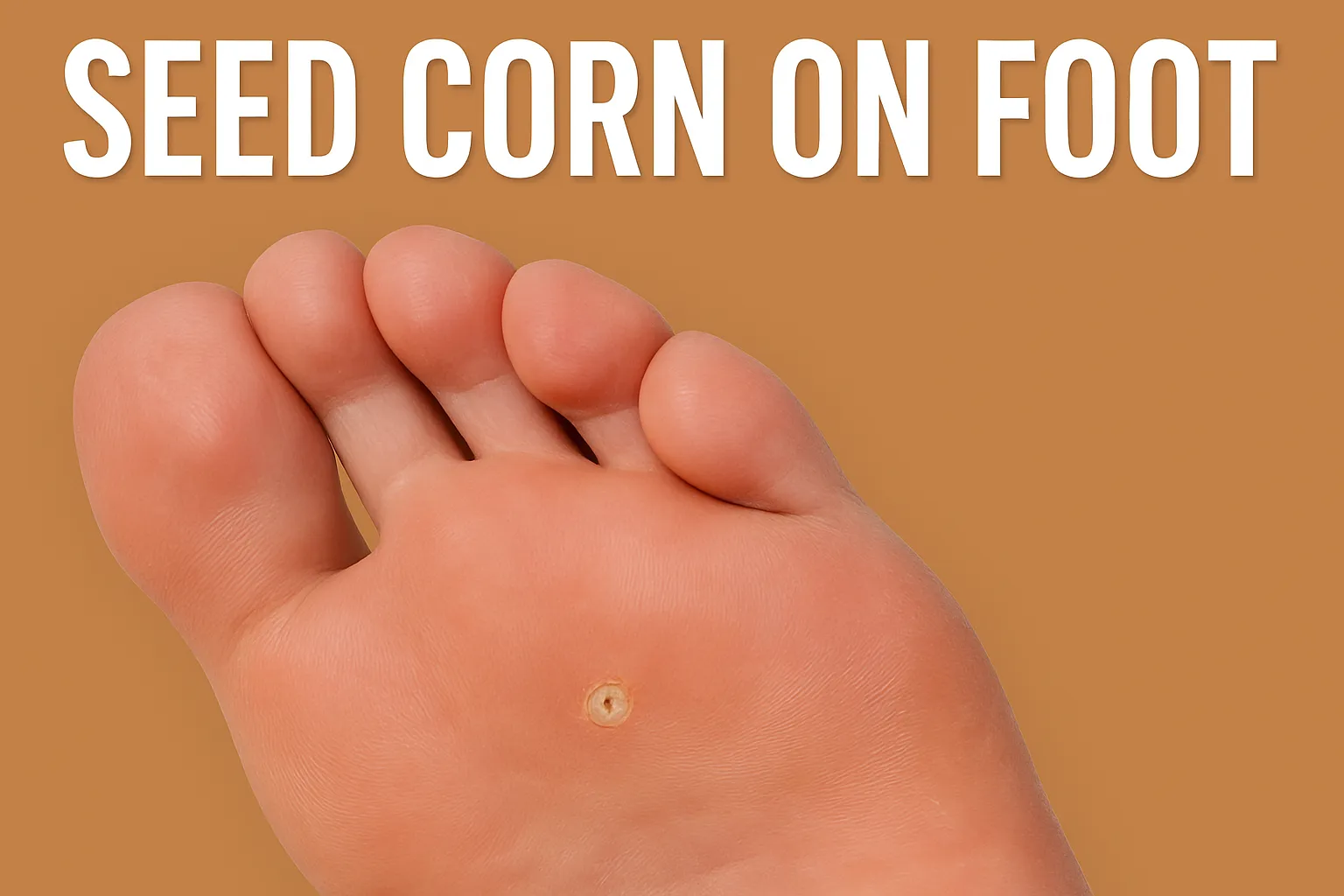
A seed corn on foot is a tiny, hard, circular spot of thickened skin. Unlike regular corns, seed corns are much smaller and often appear on the bottom of the feet—especially on the heel or ball area. They look like a small white or yellow dot embedded in the skin.
Although they are small in size, seed corns can be surprisingly painful when you walk, stand, or apply pressure.
Why Seed Corns Develop
Understanding the root cause helps you prevent them in the future. Typically, a seed corn on foot develops due to pressure and friction on the skin.
Common Causes
- Dry Skin Build-up: When dead skin accumulates, it forms hard plugs that turn into seed corns.
- Friction from Footwear: Tight or ill-fitting shoes rub against the skin, causing corns to form.
- Excess Pressure: Standing for long hours or walking barefoot frequently increases friction.
- Poor Foot Hygiene: Not exfoliating your feet enough allows hardened skin to develop.
- Abnormal Walking Pattern: Irregular gait puts extra pressure on specific foot areas.
Seed corns are not caused by infection or bacteria—they’re simply a result of pressure.
Who Is Most Likely to Get Seed Corns?
Anyone can develop seed corns, but certain conditions make them more likely.
High-Risk Groups
- People who walk or run a lot
- Individuals with dry or cracked feet
- Those who wear tight shoes
- People with foot deformities like hammertoes or flat feet
- Individuals who stand for long hours at work
If you fall into one of these groups, you need to pay extra attention to foot care.
Symptoms of Seed Corn on Foot
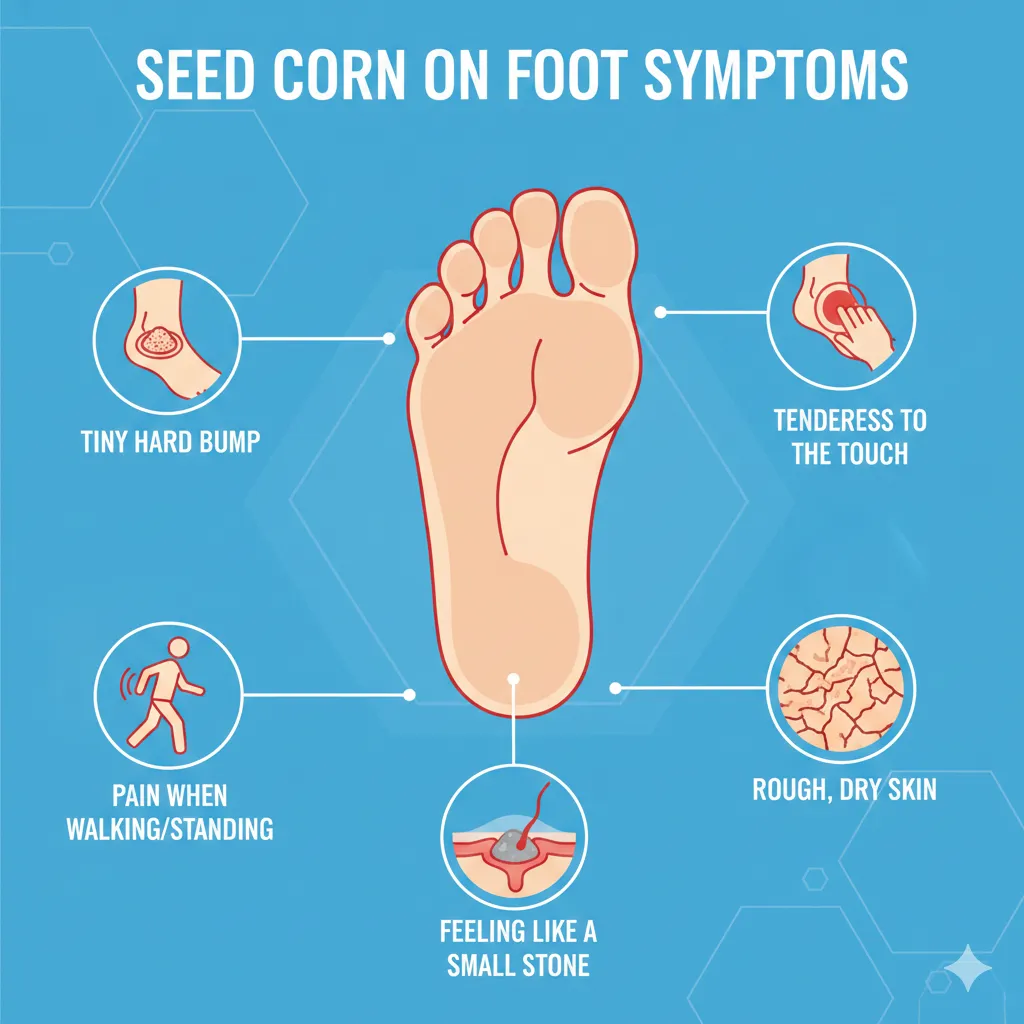
The symptoms of a seed corn on foot are easy to identify once you know what to look for.
Common Symptoms
- A tiny hardened bump on the bottom of the foot
- Pain while walking or standing
- Tenderness when touched
- Rough, dry skin around the bump
- Feeling like a small stone is stuck under your skin
Seed corns are usually very small, but they are deeper than they appear on the surface.
Difference Between Seed Corns, Calluses & Plantar Warts
These conditions look similar but are not the same. Here’s a helpful comparison:
| Condition | Appearance | Pain Level | Cause | Location |
|---|---|---|---|---|
| Seed Corn on Foot | Small, round, hard plug | Painful with pressure | Friction & dry skin | Heel, ball of foot |
| Callus | Large, flat, thick area | Mild discomfort | Repeated pressure | Soles, palms |
| Plantar Wart | Rough bump with black dots | Painful when squeezed | Virus (HPV) | Bottom of foot |
How to Diagnose a Seed Corn on Foot
Most seed corns can be identified at home by appearance. However, if you’re unsure, a podiatrist can diagnose it easily through visual examination. In very rare cases, they may scrape the surface to check whether it is a wart or corn.
How to Treat a Seed Corn on Foot
Treating a seed corn on foot is fairly simple if done correctly. You can try home remedies first, but persistent cases may require professional treatment.
1. Soak Your Feet Regularly
Soaking your feet softens hardened skin.
How to Do It
- Use warm, soapy water
- Soak for 10–15 minutes
- Pat dry gently
Add Epsom salt for relaxation and extra softening.
2. Exfoliate the Area
Use a pumice stone or foot file to gently reduce thick skin.
Tips
- Avoid aggressive scrubbing
- Use circular motions
- Do it once or twice a week
This prevents the seed corn from growing deeper.
3. Apply Moisturizer
Dry skin is a major cause of seed corn formation. Apply a thick moisturizer daily.
Some people even use nourishing natural oils like black seed oil because it helps soften rough skin and keeps feet moisturized.
4. Use Over-the-Counter Pads
Corn pads protect the area from friction and reduce pain.
Types of Pads
- Foam pads
- Gel inserts
- Soft ring cushions
Always choose non-medicated pads unless advised by a doctor.
5. Wear Better Footwear
Poor footwear is often the main reason for corn formation.
Choose Shoes That Are
- Wide enough in the toe area
- Cushioned and supportive
- Breathable
- Not too tight or too loose
Avoid high heels and narrow shoes if you experience frequent seed corns.
6. Professional Removal
If the seed corn on foot is severe, a podiatrist can remove it safely.
Methods
- Shaving off hardened skin with a scalpel
- Applying medicated solutions
- Treating underlying walking pattern issues
Never attempt to cut out a seed corn at home.
Home Remedies for Seed Corn on Foot
Many simple home remedies help soften and reduce seed corns.
Popular Options
- Castor oil: Softens the skin
- Aloe vera gel: Soothes and hydrates
- Coconut oil: Helps reduce dryness
- Diluted apple cider vinegar: Softens hardened skin
- Rapeseed oil: Sometimes used for gentle foot moisturization in natural skincare routines
Use these remedies consistently for best results.
Medical Treatments for Seed Corns
If home treatment doesn’t work, doctors may use advanced methods.
Medical Options
- Prescription-strength salicylic acid
- Custom orthotics
- Minor debridement
- Treatment for gait or foot structure issues
These treatments target the root cause, preventing recurrence.
How to Prevent Seed Corn on Foot
Prevention is the best way to avoid painful flare-ups.
Key Prevention Tips
- Moisturize feet daily
- Exfoliate regularly
- Avoid walking barefoot on hard surfaces
- Wear supportive footwear
- Replace shoes when they wear out
- Use cushioned insoles
- Maintain proper foot hygiene
With the right care, you can keep seed corns away permanently.
When to See a Doctor
You should consult a professional if:
- The seed corn becomes extremely painful
- You notice swelling or redness
- Home treatment doesn’t help after a few weeks
- You have diabetes or poor circulation
- You’re unsure if it’s a wart or corn
A doctor can diagnose and treat the issue safely.
FAQs
1. What does a seed corn on foot look like?
It looks like a tiny, round, hard bump that appears white or yellow and is deeply embedded in the bottom of the foot.
2. Is a seed corn on foot painful?
Yes, seed corns can be painful because they press into deeper layers of skin when you walk or apply pressure.
3. How long does a seed corn take to go away?
With correct care, it may disappear in 1–3 weeks. Severe cases take longer.
4. Can a seed corn on foot go away without treatment?
It might shrink, but without reducing pressure or friction, it usually returns.
Conclusion
A seed corn on foot may be tiny, but it can cause surprisingly sharp discomfort. The good news is that with proper care—like moisturizing, exfoliating, wearing good footwear, and reducing pressure—you can treat it easily and prevent it from returning. Whether you choose home remedies, OTC products, or professional podiatry treatments, consistent foot care is your best defense.
Healthy feet lead to a more comfortable life, so take the steps today to keep seed corns away for good.